Drug Interaction Checkers Explained: What These Tools Can — and Cannot — Tell You
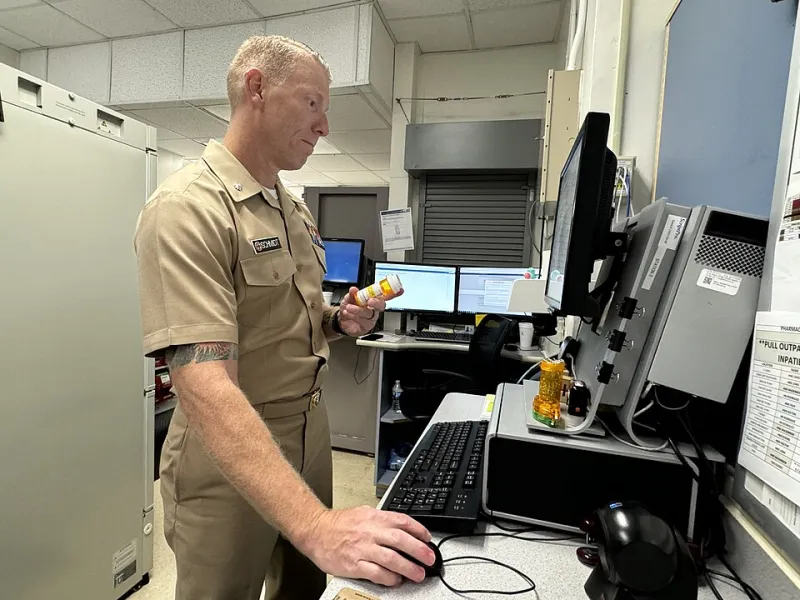
Photo: U.S. Navy NMRTC by Emily McCamy, Public domain, via Wikimedia Commons
If you have ever found yourself holding two prescription bottles and wondering whether it is safe to take them together, you are far from alone. Millions of Americans manage multiple medications simultaneously, and the question of how those drugs interact is one of the most common — and consequential — concerns in everyday healthcare. Drug interaction checkers, available through pharmacy websites, dedicated health platforms, and even smartphone apps, promise a quick answer. But how reliable are those answers, and what should you actually do with them?
Understanding the mechanics behind these tools, their genuine usefulness, and their significant blind spots can help you become a more informed patient — and a more effective advocate for your own health.
How Drug Interaction Checkers Actually Work
At their core, drug interaction checkers are database-driven tools. When you enter two or more medications into the search fields, the system cross-references those drugs against a library of known interactions, typically sourced from clinical literature, pharmacology research, and regulatory data compiled by organizations such as the FDA. Prominent databases that power many of these tools include those maintained by Wolters Kluwer (which underlies several pharmacy systems), IBM Micromedex, and the National Library of Medicine's DailyMed.
The checker then returns a result — often color-coded or ranked by severity — indicating whether an interaction exists and, if so, what kind. Common categories include contraindicated combinations (drugs that should never be taken together), major interactions (those with significant clinical risk), moderate interactions (which may require monitoring or dosage adjustment), and minor interactions (generally low-risk but worth noting).
Several reputable tools are freely accessible to US consumers. Drugs.com offers one of the most comprehensive public-facing checkers, allowing users to input multiple medications at once. The FDA's own resources and Medscape's interaction checker are also widely used. Many large pharmacy chains — CVS, Walgreens, and Rite Aid among them — embed interaction-checking features directly into patient account portals.
What the Results Are Actually Telling You
Here is where many consumers stumble: seeing a warning does not necessarily mean you cannot or should not take those medications together. Interaction alerts exist on a spectrum, and context matters enormously.
A "moderate" interaction flag between two common drugs might mean that your prescriber is already aware of the combination and has determined the benefit outweighs the risk. It might mean the interaction only becomes relevant at doses far higher than what you have been prescribed. Or it might mean that periodic blood monitoring will be sufficient to keep you safe. A warning on a screen cannot account for your specific dosage, your kidney function, your age, your body weight, or the dozen other clinical variables your healthcare team considers.
Conversely, a "no interaction found" result carries its own caveats. The absence of a flagged interaction does not guarantee that two drugs are perfectly safe in combination for your particular physiology. It simply means that no documented interaction has been catalogued in that specific database at that moment in time.
The Limitations You Need to Know
Drug interaction databases, for all their utility, are works in progress. New drug interactions are discovered regularly, and there is an inherent lag between when a concern is identified in clinical practice or research and when it is formally incorporated into a commercial database. Newer medications, in particular, may have limited interaction data simply because they have not been on the market long enough to generate a robust evidence base.
These tools also typically focus on drug-drug interactions and may give less thorough coverage to drug-supplement interactions or drug-food interactions. St. John's Wort, for instance, is well-documented to interfere with dozens of prescription medications, including antidepressants, blood thinners, and certain HIV medications. Grapefruit juice is another widely cited culprit, capable of affecting the metabolism of statins, immunosuppressants, and calcium channel blockers. Not every checker treats these variables with equal rigor.
Additionally, most publicly available tools do not account for pharmacogenomics — the way an individual's genetic makeup influences how they metabolize specific drugs. Two people taking the same combination of medications may experience entirely different outcomes based on their genetic profile, a nuance that no general-purpose interaction checker can capture.
Using These Tools as a Conversation Starter, Not a Final Answer
The most productive way to use a drug interaction checker is to treat it as preparation for a conversation with your pharmacist or prescriber, not as a substitute for one. If a checker flags a potential concern, write it down. Note the severity level it assigned and any description of the potential effect. Then bring that information to your next pharmacy visit or medical appointment.
Pharmacists, in particular, are an underutilized resource in this context. As medication experts with full access to your prescription history, they are uniquely positioned to evaluate whether a flagged interaction is clinically significant given your specific situation. Unlike a database, a pharmacist can ask follow-up questions, check your complete medication list including over-the-counter drugs and supplements, and consult more specialized clinical resources if needed.
When you approach the conversation, consider framing it directly: "I used an online interaction checker and saw a flag between my metformin and this new prescription — can you help me understand whether that's something we need to address?" That kind of proactive, informed engagement tends to yield far more useful responses than a vague expression of general concern.
A Few Practical Tips Before You Search
If you decide to use an interaction checker independently, a few habits will improve the quality of your results. First, use the drug's generic name where possible, as some tools may not recognize all brand names or may return incomplete results when brand names are entered. Second, include every medication you take — prescription, over-the-counter, and any supplements — rather than checking pairs in isolation. Interactions can involve three or more substances simultaneously, a phenomenon known as a drug-drug-drug interaction that individual pairwise checks may miss entirely.
Finally, pay attention to which database is powering the tool you are using. Checkers built on more comprehensive, regularly updated clinical databases will generally offer more reliable results than those relying on older or more limited sources.
The Bottom Line
Drug interaction checkers represent a genuine step forward in consumer health literacy. They place meaningful pharmaceutical information directly in the hands of patients and can prompt important conversations that might otherwise never happen. But they are tools, not oracles. Their value lies not in delivering a final verdict on your medication regimen, but in helping you ask better questions of the professionals who are equipped to answer them.
At PillsMap, we believe that an informed patient is a safer patient. Using these resources thoughtfully — with an understanding of what they can and cannot tell you — is a meaningful part of taking ownership of your health.