One Dose Does Not Fit All: The Biology Behind Why Your Prescription Is Uniquely Yours
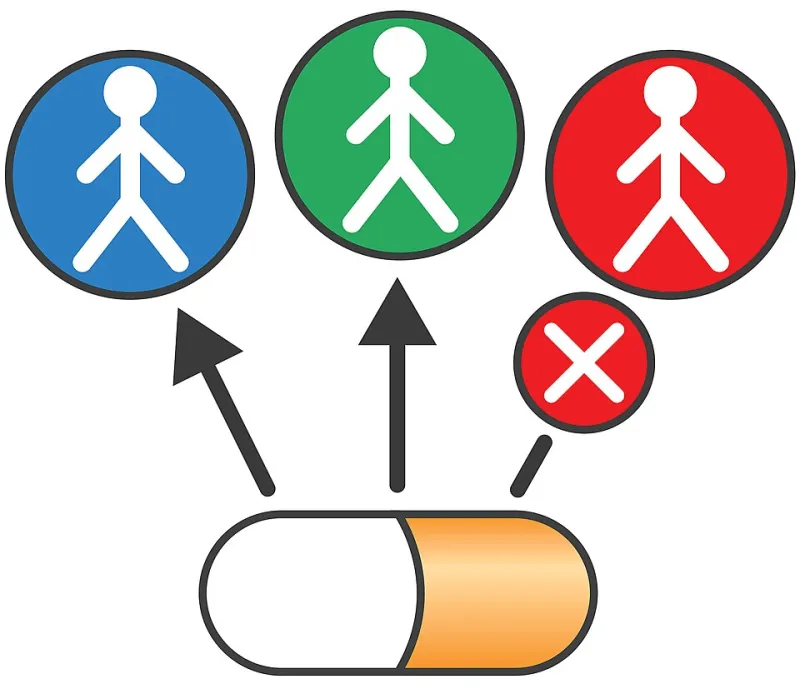
Photo: The U.S. Food and Drug Administration, Public domain, via Wikimedia Commons
When a physician writes a prescription, the number of milligrams on that slip of paper represents far more than a standard recommendation pulled from a reference book. It is, ideally, a carefully considered estimate tailored to the individual sitting across the desk. Yet many patients leave the pharmacy wondering why their dose differs from a spouse's, a sibling's, or a friend's — even when they share the same diagnosis and take the same medication.
The answer lies in a field of medicine that is rapidly reshaping how clinicians think about treatment: the personalized science of pharmacology. Your body is not a generic vessel. Its age, weight, organ capacity, and genetic blueprint all influence how a drug is absorbed, distributed, broken down, and ultimately eliminated. Understanding these variables is not merely academic — it can directly affect the safety and effectiveness of the medications you take.
Why the "Standard Dose" Is Really Just a Starting Point
Most drug dosages published in prescribing guidelines are derived from clinical trials conducted on populations of varying demographics. These trials generate an average effective dose — a number that works reasonably well for a broad group of people. However, averages, by definition, do not describe individuals.
Pharmacologists often speak of the concept of pharmacokinetics: the study of how the body processes a drug over time. This includes four distinct stages — absorption, distribution, metabolism, and excretion, collectively abbreviated as ADME. Each of these stages can be influenced by personal biology, meaning the same 10 mg tablet can behave very differently depending on who swallows it.
The Role of Age: From Pediatric Patients to Older Adults
Age is one of the most significant factors in dose determination, and its effects are not limited to childhood. At both ends of the lifespan, the body processes medications in ways that differ substantially from those of a healthy middle-aged adult.
In children, organs are still developing, body composition differs markedly from adults, and enzyme systems responsible for drug metabolism may not yet be fully functional. Pediatric dosing is rarely a simple fraction of an adult dose — it requires careful weight-based calculations and, in some cases, age-specific formulations.
At the other end of the spectrum, older adults — particularly those over 65 — experience physiological changes that can significantly alter drug behavior. Kidney function typically declines with age, which means medications cleared through the renal system may accumulate to higher-than-intended levels if doses are not adjusted. Liver function similarly diminishes, slowing the metabolism of drugs that depend on hepatic enzymes. Additionally, body composition shifts — with reduced muscle mass and increased fat — can alter the distribution of both fat-soluble and water-soluble medications.
This is why clinicians frequently apply what is known as the "start low, go slow" principle when prescribing for elderly patients. It is not a sign of under-treatment; it is a recognition that an older body requires a different pharmacological conversation.
Body Composition: Weight, Fat Distribution, and Beyond
Body weight is perhaps the most intuitive dosing variable — many patients assume that larger individuals simply receive larger doses. While this is sometimes true, the relationship is considerably more nuanced.
Fat-soluble medications, such as certain sedatives and anesthetics, distribute into fatty tissue. A person with a higher percentage of body fat may require a higher initial dose but could experience prolonged effects as the drug slowly releases from fat stores over time. Conversely, water-soluble drugs are distributed through lean body mass and body fluids, meaning that two people with identical total body weights but very different body compositions may require entirely different doses.
Height-to-weight ratios, lean body mass calculations, and even measures of body surface area are all tools that prescribers may use — particularly for chemotherapy agents, where dosing precision is critical.
Organ Function: The Liver and Kidneys as Gatekeepers
The liver and kidneys serve as the body's primary drug-processing organs, and their functional capacity has a direct bearing on how medications behave in the system.
The liver metabolizes most drugs through a family of enzymes known as cytochrome P450 (CYP450). When liver function is compromised — whether due to cirrhosis, hepatitis, or other conditions — these enzymes may work less efficiently, allowing drug concentrations to rise to potentially harmful levels. Prescribers managing patients with hepatic impairment must often reduce doses or extend the interval between doses to prevent toxicity.
The kidneys filter the blood and eliminate drug metabolites through urine. A standard measure called the glomerular filtration rate (GFR) is used to assess kidney function, and many prescribers calculate a patient's estimated GFR before selecting a dose for renally-cleared medications. Conditions such as diabetes and hypertension — both highly prevalent in the United States — can impair kidney function over time, making renal dose adjustments a routine consideration in many clinical settings.
Pharmacogenomics: When Your DNA Shapes Your Dose
Perhaps the most cutting-edge dimension of dosage individualization is pharmacogenomics — the study of how genetic variations influence a person's response to medications. This field has moved from research laboratories into clinical practice at a remarkable pace over the past decade.
Genetic differences in CYP450 enzymes are among the most studied. Individuals can be categorized as poor metabolizers, intermediate metabolizers, normal metabolizers, or ultra-rapid metabolizers of specific drugs, depending on the variants they carry. A poor metabolizer of a particular antidepressant, for example, may accumulate the drug in their system even at standard doses, leading to side effects. An ultra-rapid metabolizer of the same drug may process it so quickly that it produces little therapeutic effect at conventional doses.
Pharmacogenomic testing — sometimes called PGx testing — is now commercially available and increasingly covered by insurance for certain clinical indications. Medications affected by these genetic variations include commonly prescribed antidepressants, anticoagulants like warfarin, certain pain medications, and a growing list of cardiovascular drugs. Patients who have experienced unexpected side effects or poor treatment responses may wish to discuss PGx testing with their physician.
Talking to Your Doctor: Questions Worth Asking
Understanding that dose individualization exists is only the first step. The next is knowing how to engage your healthcare provider in a meaningful conversation about whether your current dose is optimized for your unique biology.
Consider asking your prescriber the following:
- Has my kidney or liver function been assessed in relation to this medication?
- Is my current weight factored into this dose, and should it be reassessed if my weight changes significantly?
- Are there genetic factors that might influence how I respond to this drug?
- How will my dose be monitored over time, and what signs of over- or under-dosing should I watch for?
These are not challenging questions — they are reasonable, informed inquiries that any clinician should welcome. Pharmacists, too, are an underutilized resource. As medication experts, they can often provide guidance on whether a dose seems consistent with your known health profile and flag potential concerns before they become problems.
The Takeaway: Your Prescription Is Personal
The next time you notice that your dose differs from someone else taking the same medication, resist the impulse to assume an error was made. More likely, that difference reflects the thoughtful application of pharmacological principles to your specific biology.
Dosage individualization is not a workaround for imprecision — it is the very definition of precise prescribing. As science continues to refine our understanding of how genetics, physiology, and life stage interact with pharmacology, the era of the one-size-fits-all prescription is gradually giving way to something far more sophisticated: medicine that is genuinely mapped to you.