Same Pill, Wildly Different Price: Decoding Pharmacy Pricing and Finding the Best Deal on Your Prescription
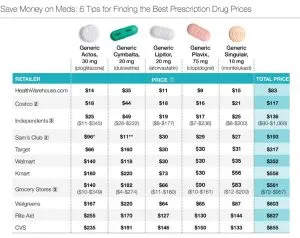
Photo: pharmacy prescription price comparison shopping medication cost, via clearhealthcosts.com
You hand your prescription to the pharmacist at a large chain store and learn your thirty-day supply will cost $142. A week later, a colleague mentions she fills the exact same medication at a warehouse club pharmacy for $18. Same drug. Same dosage. Same manufacturer. Two entirely different prices.
This is not an anomaly. It is the everyday reality of prescription drug pricing in the United States—a system so fragmented and opaque that even pharmacists themselves sometimes struggle to explain why prices fluctuate so dramatically from one counter to the next. For patients managing chronic conditions or tight budgets, understanding the forces behind these disparities is not merely interesting—it is financially consequential.
Why Pharmacy Pricing Has Almost Nothing to Do With What the Drug Actually Costs to Make
The sticker price on a prescription medication bears little relationship to its manufacturing cost. Instead, it reflects a layered negotiation between multiple parties: pharmaceutical manufacturers, wholesale drug distributors, pharmacy benefit managers (PBMs), insurance companies, and the pharmacies themselves.
At the center of this web sits the pharmacy benefit manager, a largely invisible intermediary that negotiates drug prices on behalf of insurers and employers. PBMs set something called the Maximum Allowable Cost (MAC), which caps what a pharmacy can be reimbursed for generic drugs. They also negotiate rebates with manufacturers—rebates that do not necessarily flow back to the patient at the point of sale.
Pharmacies, meanwhile, purchase drugs from wholesalers at a negotiated acquisition cost and then apply their own markup before setting a retail price. That markup is not standardized. A national chain operating on thin margins and high volume may price a generic differently than an independent community pharmacy or a hospital outpatient pharmacy. Regional market competition, local operating costs, and each pharmacy's individual contracts with PBMs all feed into the final number you see on the register.
The result is a pricing environment where the same bottle of metformin or lisinopril can legally carry five different prices within a five-mile radius.
The Insurance Paradox: When Your Coverage Actually Costs You More
It seems counterintuitive, but using your health insurance to fill a prescription is not always the cheapest option. This phenomenon—sometimes called the copay clawback—occurs when a drug's negotiated insurance price is actually higher than what a cash-paying customer would pay with a discount program.
Consider a common generic antibiotic. Your insurance copay might be $20. But a discount card could reduce the cash price to $6. In that scenario, running the prescription through your insurance costs you more money, not less. Until recently, pharmacists were contractually prohibited by PBMs from volunteering this information. Legislation known as gag clause bans, signed into federal law in 2018, now requires pharmacists to inform patients when a lower-cost option exists—but awareness of this right remains low among patients.
The practical takeaway: always ask your pharmacist whether a discount program would cost less than your insurance copay before completing a transaction.
Prescription Price Comparison Tools: A Practical Overview
The past decade has produced a category of consumer tools designed specifically to cut through pricing opacity. These platforms aggregate pricing data from thousands of pharmacies and generate discount codes or coupons that override standard retail prices.
GoodRx is the most widely recognized of these services. By entering your medication name, dosage, and zip code, you can compare prices across nearby pharmacies and download a coupon that instructs the pharmacy to bill at a negotiated discount rate rather than the standard retail price. GoodRx is free to use for basic comparisons, though it also offers a paid membership tier with deeper discounts on certain medications.
RxSaver, Blink Health, and NeedyMeds offer similar functionality, and prices on the same drug can vary even between these platforms—meaning it is worth checking more than one before filling a prescription.
Cost Plus Drugs (costplusdrugs.com), launched by Mark Cuban in 2022, operates on a different model entirely. Rather than negotiating within the existing PBM framework, it purchases drugs directly from manufacturers and sells them at acquisition cost plus a transparent markup and dispensing fee. For certain generics, the savings compared to traditional pharmacy prices are substantial.
For patients who are uninsured, underinsured, or filling a medication not covered by their plan, these tools represent a meaningful and accessible form of financial relief.
The Warehouse Club Advantage—And Its Limitations
Warehouse retailers such as Costco and Sam's Club have long maintained pharmacy departments that price many generic medications significantly below what traditional chain pharmacies charge. Costco, in particular, has developed a reputation for competitive generic pricing, and in many cases membership is not required to use the pharmacy (though policies vary by state).
The tradeoff is convenience and scope. Warehouse pharmacies may carry a more limited formulary, have fewer locations, and may not offer the extended hours or clinical services (such as immunizations or medication counseling) that a full-service chain pharmacy provides. For patients whose medication regimens are straightforward and stable, the cost savings may well outweigh these limitations. For those managing complex, multi-drug therapies who rely on pharmacist consultation, a different calculus may apply.
Manufacturer Patient Assistance Programs: The Option Many Patients Don't Know Exists
For brand-name medications without a generic equivalent—often the most expensive drugs on the market—pharmaceutical manufacturers frequently operate patient assistance programs (PAPs) that provide the medication at reduced or no cost to qualifying patients. Eligibility is typically based on income and insurance status.
The NeedyMeds database and RxAssist are two reputable directories that catalog these programs by drug name and manufacturer. Applying for a PAP requires some paperwork and a physician's involvement, but for patients facing monthly costs of several hundred dollars or more for a specialty medication, the effort can yield significant financial relief.
Additionally, many manufacturers offer copay assistance cards for insured patients, which function similarly to a coupon and reduce out-of-pocket costs at the pharmacy counter. These cards are typically not valid for patients enrolled in federal programs such as Medicare or Medicaid.
A Practical Checklist for Lowering Your Prescription Costs
Before filling any new prescription—or renewing one you have been paying full price for—consider working through the following steps:
- Ask your prescriber about generics. If a brand-name medication has been prescribed and a therapeutically equivalent generic exists, request it explicitly.
- Compare prices before you fill. Use GoodRx, RxSaver, or Cost Plus Drugs to check prices at pharmacies near you.
- Ask the pharmacist directly. Request confirmation that the price you are being quoted is the lowest available, including cash-pay discount options.
- Check warehouse club pharmacies. If you have a membership or a nearby location, compare their pricing.
- Investigate manufacturer assistance. For brand-name or specialty drugs, search NeedyMeds or the manufacturer's website for PAPs or copay cards.
- Consider mail-order pharmacies. For maintenance medications taken long-term, a ninety-day mail-order supply through your insurer's preferred pharmacy often carries a lower per-dose cost than monthly retail fills.
The Bigger Picture
The pricing inconsistency that patients encounter at the pharmacy counter is not the result of error or oversight. It is the predictable output of a system built on layered negotiations, proprietary contracts, and limited transparency requirements. While systemic reform remains an ongoing policy debate, individual patients are not without recourse.
The tools and strategies outlined here will not eliminate the underlying complexity, but they can meaningfully reduce what you pay. In a healthcare environment where medication costs are among the most common barriers to adherence, knowing how to navigate the pharmacy pricing maze is a genuinely valuable skill—one that PillsMap is committed to helping you develop.